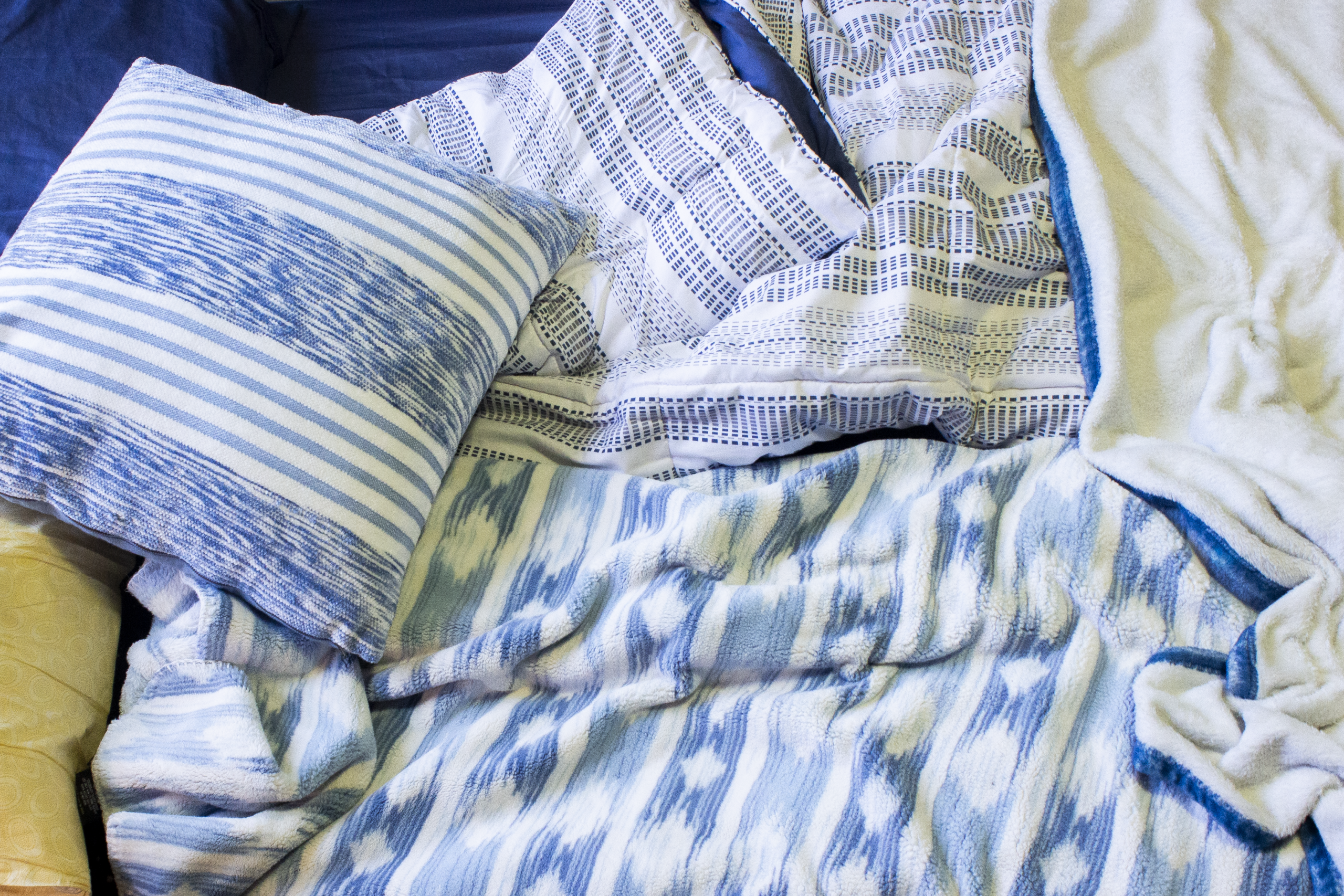
The Scandinavian Sleep Method, a way to combat the nightly struggle of battling for the blanket.
For the past couple of weeks, I have fallen victim to the blanket thief. Just as I enter that perfect mode of sleep, I’m jolted awake by a chill. After a long day of classes, caffeine, and workouts, the last thing I need in my routine is this constant sheet stealer. So what do I do? Get rid of my boyfriend?
When I expressed my concerns to my Danish mother, she reminded me that my grandparents and great-grandparents never shared blankets. It had nothing to do with how much they loved each other; it was just routine. In Denmark, separate duvets are the norm. The Scandinavian sleep method focuses on keeping couples in the same bed but under separate covers to optimize sleep and minimize the nightly tug-of-war.
The Tug-of-War
When you’re deep in dreamland, a partner stealing the blanket can interrupt the sleep cycle.
Dr. Likhita Shaik, sleep medicine specialist at UI Health Care, says when you sleep next to a partner, making movements such as simply rolling over, it acts as an external stimulus and can disrupt your sleep.
Not only is the blanket fight a stimulus, Shaik says, but a partner who uses a phone can impact your sleep quality. Removing those can make a big difference in the sleep you’re getting. To remove as many stimuli as possible, when I tried the Scandinavian sleep method out with my boyfriend, we had no phones in bed either.
The separation of duvets allows couples to minimize the blanket tango, and you can adjust your preferred blanket thickness, length, style, and color in ways that a shared blanket doesn’t allow. I typically run pretty cold during the night, and my boyfriend runs warm, so my thick winter duvet isn’t exactly his favorite. He also likes to kick off the blanket and roll on top of it, to ensure I sleep as frigid as possible. So, realistically, something like separate blankets would be preferred for us, comfort-wise.
The main thing I noticed was that I felt more well-rested. Not once did I wake up to make any adjustments to the blanket. My boyfriend seemed to have slept better as well, but being the slightly clingy blanket stealer he is, he complained about the “wall” I put between us.
Scandinavian Relationship Saver?
The ability to customize your sleeping habits was intriguing to me, but I wondered if something like sleep separation would affect my relationship.
“We all need good quality of sleep to be more present and more empathetic toward our partners in the relationship,” says Dr. Yishan Xu, licensed clinical psychologist, sexologist, and behavioral sleep medicine specialist. “If such a sleep arrangement could help with one partner’s sleep quality, and the other partner is willing to accept it, then it may be a very positive thing for the couple.”
With a few honest attempts, I came to the conclusion that the Scandinavian sleep method may not work for my relationship. It was interesting to see how much external stimulus, like blanket sharing and sleep temperature, can affect your sleep, but it wasn’t quite enough for me to evict my boyfriend from sharing a blanket with me forever. One thing I will keep is the no-phones-in-bed rule, which removes blue light interruption, but also allows me to have meaningful pre-bedtime conversations with my partner.
Sleep methods aren’t one-size-fits-all, so although this one didn’t work for my relationship, it might work for yours. I may end up spending a few more nights out in the cold, but maybe I’ll come across a sleep method that incorporates the art of pushing the comforter burglar out of bed entirely.
Words: Melanie Kure-O’Reilly

No responses yet