Iowa hockey leagues and their way to the top
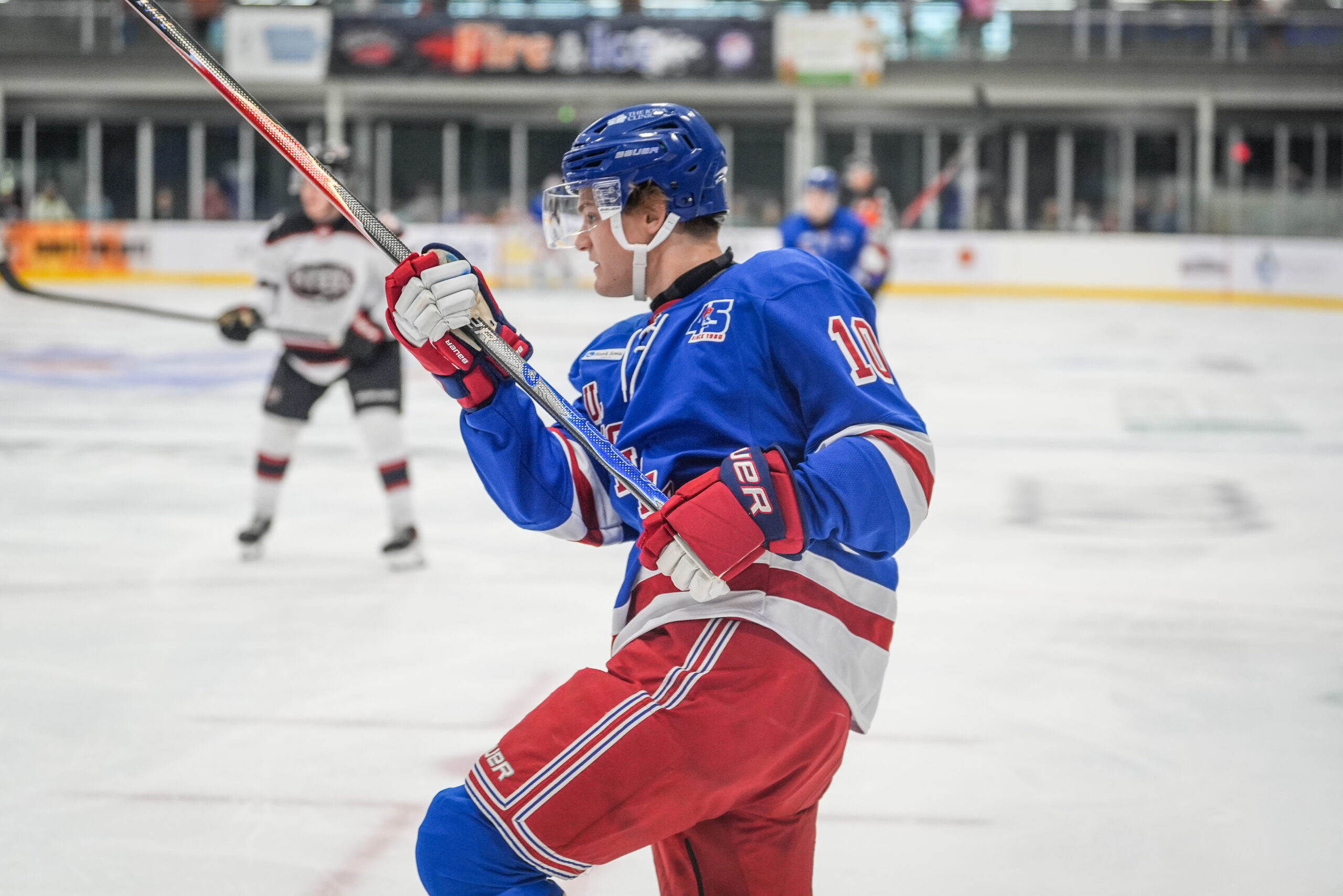
Blake Zielinski never planned on living in Des Moines to play hockey. He didn’t even
plan on playing hockey professionally. Despite starting to skate at four years old, the projected 2026 NHL draft pick didn’t know hockey would turn into his career.
“I was playing different sports when I was younger, and I didn’t really know what I
wanted to do,” Zielinski says.
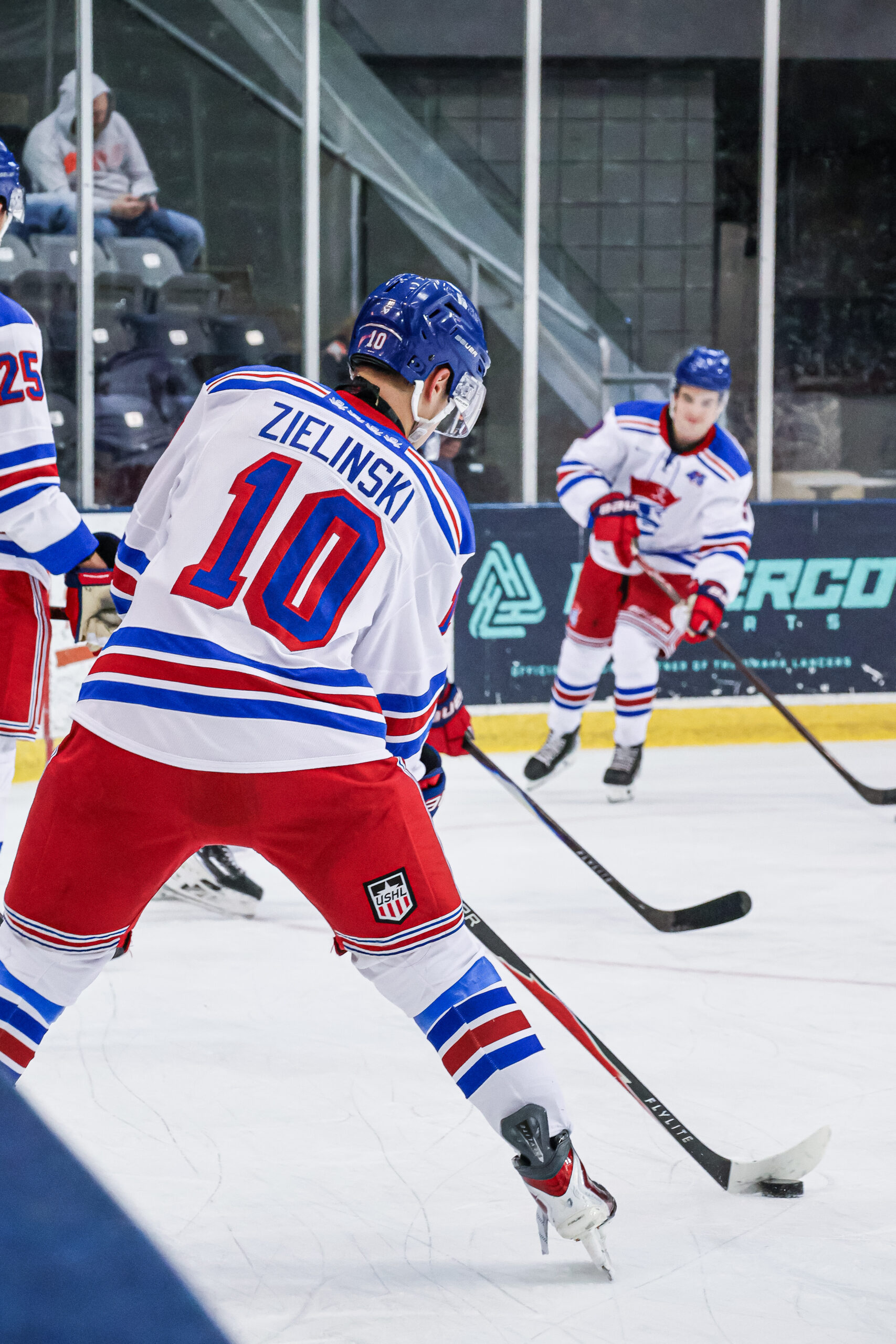
Now Zielinski, originally from Berlin, New Jersey, is a forward for the Des Moines Buccaneers, a junior league hockey team in the United States Hockey League (USHL). And while it’s not the NHL — yet — spending a few years away from home might just get him there.
Iowa: The Neutral Zone
When you think of Iowa, hockey isn’t the first thing to come to mind. If we’re playing the word association game, hockey pairs nicely with Canada — not Iowa’s cornfields.
Most people know the NHL, but there’s an entire ecosystem of
leagues underneath it. Rather than a simple process from minors to majors, going pro in hockey is like a never ending game of Shoots and Ladders.
Despite Iowa’s lack of ice notoriety, the state has teams on all tiers of the hockey ladder, a total of eight semi-professional hockey teams in a state that has seemingly no focus on the sport.
The USHL is harbored in the Midwest, which feels wrong with major hockey being either up north or on the East Coast (and Minnesota, but this isn’t about them). But there’s a reason for the seemingly odd location.
“[There are] non-traditional hockey markets predominantly in the Midwest,” says Frank Butler, the Senior Director of Player Personnel for the USHL. “For us, it’s fan interaction and communities.”
By anchoring in states with little to no major league sports, or in communities without bigger teams, the fan bases can latch onto these junior hockey teams with more dedication. It’s also an opportunity for these teams to engage in their community service initiatives with a higher impact.
“Being able to have a space and play in an area where you’re kind of secluded, and you can focus on hockey, but it’s not too heavily populated [is a benefit],” Butler says.
Starting off small can increase player focus and bring a warmer community environment while they’re away.
The Maple Leaves Don’t Fall Far from the NHL
“A lot of people see [Canadian junior leagues] as better because it’s more professional,” says Bekah Benoit, the Digital Media Coordinator for the Des Moines Buccaneers.
The Canadian leagues are a quick-moving gambit where players move from youth hockey to the CHL, then go pro. In contrast, the USHL is more focused on the well-rounded development of the player on and off the ice.
Another aspect of this preparedness is in “instilling the culture and trying to provide kids with the skills that will make them successful outside of hockey,” Butler says.
While a large majority of USHL players will advance to NCAA teams, it’s not a guarantee. Skills like professionalism, manners, press training, and handling schedules are easily transferable once their hockey careers end. It ties back to the human aspect of the game — you can’t lead a team on the ice until you know how to guide a group of guys off it. For the Buccaneers, that looks like online high school, community service, and leadership classes led by returning players.
While the USHL only allows 16 to 20 year olds, there’s no cap off age for success. No matter the age, the league molds a program for the player’s future.
“I’d say the average [years in the USHL] is one or two,” Benoit says. “[But] you have some guys who maybe need or want more development, and some guys really love playing juniors.”
A majority of the Buccaneers will go to a four-year college and often play in another league after that.
“The USHL, they do such a good job with developing new, younger players to try and force them off to college and pro,” Zielinski says. “When I was given the opportunity to play here, I had to take it, and I knew it was going to be the best development for me.”
Most USHL players are committed to play Division I hockey. The NCAA rulings used to state that CHL players couldn’t play hockey at American colleges since they’re paid a stipend. Now, all college athletes have the opportunity for NIL deals, making the old rules outdated. Despite the change, the USHL still prides itself on its relationships with college coaches and player development.
“We’re not worried about that side of things,” Butler says.
While they may have the Canadians beat on player advancement, there still remains the issue of fewer NCAA spots for USHL kids.
“What we try to do now is make our kids aware that the cream of the crop just got a bit tighter,” Butler says.
Young players know that if they get the call to play in the USHL, they better take it.
“They know if they have an entry point into the [USHL] … that that’s a huge opportunity for them,” Butler says.
Making the Minors Look Major
The next step up is the AHL. It’s the purgatory of hockey, where you play until you’re called to something higher — the NHL.
“I really do believe that hockey is a solution for any problem,” says Kyle Weeden. He has good reason to be preaching in the name of hockey as he’s the Senior Director of Sales for the Iowa Wild.
He and his team are the reason Des Moines is a hockey town. The Iowa Wild, an AHL affiliate of the Minnesota Wild, have been in Des Moines for 12 years — a short amount of time for a non major team to build community.
Weeden didn’t grow up as a hockey fan, but his job of marketing the sport in Iowa has turned into admiration.
“It’s a unique opportunity to promote a sport that’s not the foundation of hockey,” Weeden says. “It’s fun to take a nontraditional sport here and make it something that can impact businesses and bring happiness to families.”
The goal is bigger than a smile on a child’s face: its bodies in the building and hopefully a winner at the end of the night.
“We’re right up there in attendance to the top half of the league,” Weeden says.
Iowa has no major league sports teams. It’s a hole that teams, like the Iowa Wild, can fill.
“We don’t see it as a negative,” Weeden says. “It’s just our situation, and we’re super happy and lucky to be in such an awesome market.”
The number of young families in Des Moines and its suburbs are also an asset for Weeden and his team.
“Schools are so big for us. The expansion west and east is pretty major for us, too,” Weeden says. “We’re able to introduce hockey to a lot of new schools.”
They host reading programs where kids can redeem their reading logs for tickets. School choirs sing the national anthem before games, and their parents pack the stands. A partnership with Scheels allows them to offer a six-week Junior Crash Course where 100 kids can learn to play hockey for free — gear included.
Of course, it couldn’t be Iowa hockey without some corn references. The Iowa Wild have a partnership with Iowa Corn where they built an outdoor ice rink in Carlisle, Iowa. And if it isn’t an ice-covered corn field, the Wild also have a blow-up rink that travels with the promotional team.
“[The Wild is] anywhere we can introduce the game,” Weeden says. “It’s good to be out in the community no matter what.”
Des Moines’ Casey’s Center is where the action happens. Players who have been crosschecked and battered long enough now play in the minor leagues, hoping to be the future of the Minnesota Wild. It’s a packed house, there’s a theme night, and the between-period entertainment has made fans actually stay in their seats.
Game presentation is the biggest asset the Wild has. It makes first time fans come back for more and keeps season ticket holders comfortable in their 10-game package.
“It starts with the fan experience,” Weeden says. “We’re a minor league team, but it has to be major league.”
Creating in-game activations, securing enough kegs on $2 beer nights, and keeping ticket sales in check is the magic behind the scenes. That alchemy is tangible beyond the ice.
Power Play
No matter the team — USHL, AHL, or NHL — there’s no denying the batch of talent is getting younger.
“The players are just getting so much better,” Butler says. “They’re starting to prepare and train like hockey players at a younger level.”
This makes Butler’s job easier. It’s also keeping the league alive while simultaneously ensuring that cities, like Des Moines, maintain their status as a homeland for hockey.
“The hockey ops and whether the team’s winning or losing [goes away],” Weeden says. “It makes the relationships and the experience matter that much more.”
Catch Zielinski this season at a Bucs game, before he’s gone, off to the next place or even the NHL. But don’t worry, there’s a fresh crop of kids coming to the Midwest for seasons to come.
Words: Amanda Favazza

No responses yet