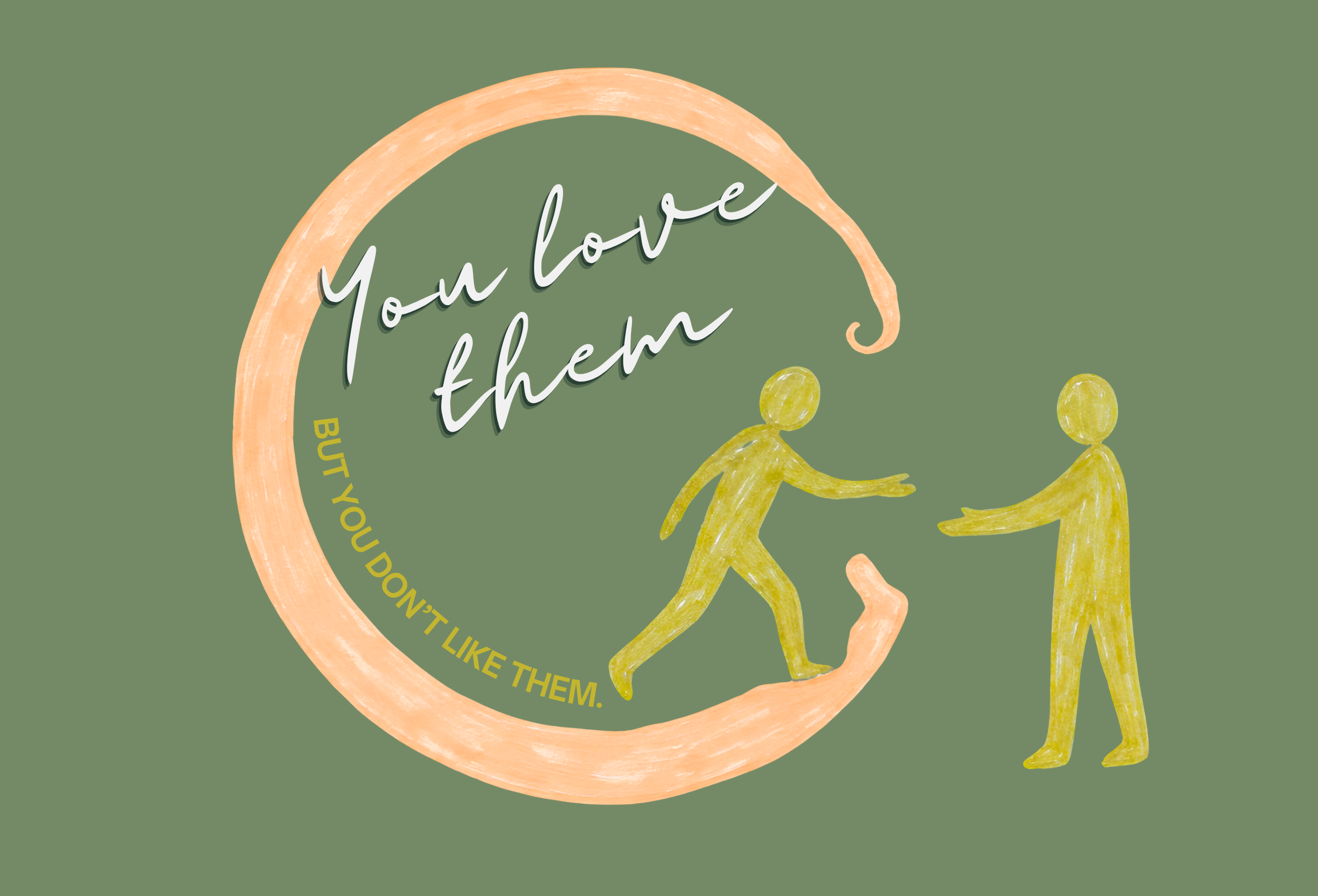
Setting boundaries with family members who keep crossing them
Kristie De Garis stopped talking to her mother 18 months ago. A dry stone waller from Scotland, De Garis says, “I think a lot of people imagine estrangement as a snap decision, but it was something that, for me, took place over decades.”
The breaking point was when her 20-year-old daughter noticed a change in De Garis’ demeanor.
“I didn’t feel like I had the emotional strength to do it up until that point, when my child said to me, ‘I don’t like seeing you like this, so hurt and so confused, I feel like you’re a different person,’” De Garis says.
Whether you’ve reached that point with a flaky friend from high school, ghosted a date with no explanation, or shunned the professor who didn’t give you a letter of recommendation, chances are there’s someone who you decided no longer gets space in your life.
Things get more complicated when it’s a family member who no longer deserves that space. Estrangement from family isn’t an easy decision to make, and it comes with a suitcase of emotions — guilt, fear, sadness, and probably a bit of resentment.
Why No Contact?
Deciding to cut off a family member can have any number of valid reasons attached to it. Consistently being made to feel small is a legitimate reason to pull away from someone.
“If you’re considering going no contact, know that your experiences are real,” says Dr. Alissa Beuerlein, a licensed professional counselor specializing in trauma. “We minimize our experiences and compare [them] to other families that are even more dysfunctional. But your experience is yours. If you feel unsupported or even harmed by your family, it’s a reasonable consideration to distance or even cut off contact from family.”
Even if the relationship is a quiet, smoldering ember, it can still burn you.
“The absence of a blowout doesn’t mean the relationship is healthy,” says Keisha Saunders-Waldron, a licensed clinical mental health counselor supervisor and CEO of Confidential Confessions Counseling Services. “You don’t need a dramatic reason to protect your peace.”
Lily Thrope, a licensed clinical social worker, says the emotional immaturity of parents is a common reason young adults go no contact.
“Feeling that even if you do communicate your feelings with your parent, they actually don’t want to or can’t tolerate the big emotions [is reason to cut them off],” Thrope says.
Melanie Kure-O’Reilly, a college student and older sister of four, cut her dad off a few years ago due to his emotional unavailability.
“Trying to have that conversation with him is just not possible, because he won’t take responsibility for anything,” Kure-O’Reilly says.
However, Kure-O’Reilly still has to see her father every so often when dropping off her little siblings or when making decisions to invite him to things — like her upcoming college graduation — to prevent a familial blowout. It adds a layer of emotion to every big decision she makes because estrangement gets complicated when contact isn’t fully broken.
All the Feelings
“There’s so much that we’re told within our society about how these relationships should be and how you should feel and how hard you should try,” De Garis says. “If your experience deviates from that, it can feel very confusing.”
The question Saunders-Waldron’s clients always ask is: “Am I allowed to do this?”
“They’re asking for permission because somewhere along the way they were taught that family connection is unconditional and that walking away makes you the problem,” Saunders-Waldron says.
Fearing emotional fallout is incredibly common; estrangement comes with immense stress.
Remember that holding conflicting feelings, while frustrating and confusing, is valid. The desire to go no contact and holding concerns for family can be simultaneously true.
“People expect to feel relieved when they go no-contact — and many do,” Saunders-Waldron says. “But what catches them off guard is mourning the relationship they wished they’d had rather than the one that actually existed.”
Kure-O’Reilly found herself focusing on what could — or should — have been.
“It was hard for me to understand that he really didn’t care, and he wasn’t going to reach out to me,” Kure-O’Reilly says.
In the midst of familial guilt, she still puts on a strong face for her siblings, who are still in her father’s life.
“My siblings still needed me, and, as an older sister, you can’t just cut them off completely,” Kure-O’Reilly says.
There’s no easy part of this process. Experiencing immense grief in this situation is valid and normal. It can also feel frustratingly unsatisfying, since it’s rarely an event of dramatic proportions but rather a silent act of hitting “block” in your contacts.
New phone, who dis? OR No contact is trending
Social media has altered the reality of what it means to go no contact. It’s been helpful for some — providing online spaces for people to connect with others who cut off family members and recognize abuse — but detrimental for others when it comes to thoughts and perspectives on family estrangement.
“Thirty years ago, people could go no contact by moving across the country from their family. They didn’t always have to have difficult conversations about why they needed the distance,” Beuerlein says. “Now, this might lead to needing to block family members on social media or limit responses.”
#Nocontact is taking off, and Google searches have spiked in the past year, making it a newfound buzzword. While it’s great that the topic is losing its taboo nature, calling it a ‘trend’ is frustrating and, at times, insulting to people who have really gone through it.
“My clients aren’t just navigating the emotional weight of the decision — they’re managing it in front of an audience, which adds a layer of shame and second-guessing that previous generations simply didn’t face,” Saunders-Waldron says.
Getting clarity, setting boundaries
One of the most important things to figure out when going no contact is understanding why you’re doing it. The best thing you can do is focus on yourself — not what others believe.
“No contact works best as a decision made for yourself, not as leverage to change someone else’s behavior,” Saunders-Waldron says. “If this person never changes, never apologize[s], never acknowledges what happened, are you still okay with the decision? If the answer is yes, that is a decision you made for yourself so you can be happy.”
Even if you’re cutting someone off for the right reasons, it’s a decision that comes with a lot of discomfort.
“If you want to have the life that you value and feel like you deserve, you have to be willing to sit with some amount of discomfort,” Thrope says.
Boundaries can be like a game of tug-of-war, where the winner is allowed to govern the other’s feelings. Saunders-Waldron says it’s important to create relationship restraints so you never have to tug on that rope again. Protect yourself because the other person is out of your control.
Figure out specifically what you need and why. This reasoning will clarify your end goal when doubts start to creep in. Consider writing a permission statement — a mantra giving yourself consent to protect your peace — so when the guilt returns, you stay steadfast in your decision.
There is no checklist of offenses to keep track of, then cut someone off when they hit 10. Trust your feelings and what feels safe, and talk to a therapist if you’re unsure.
“Anything that costs you your peace is too expensive,” Saunders-Waldron says.
Structure Your Support
There’s no cookie-cutter version of permanent ghosting.
“This black-and-white idea doesn’t have to be the only way that we approach boundaries with family,” Thrope says. “There are nuances … around how to process and set up a situation that feels mutually safe for you, but also doesn’t necessarily cut you off from your whole family.”
Trust can be rebuilt — especially if you set boundaries. Some people never talk to that family member again, while others get back in contact after a few months or even a few years of growth. But understand that reconnection may never happen.
“Sometimes people have the capacity to be who you would like them to be, and sometimes they don’t. Capacity matters. Unwillingness also matters,” says Dr. Celeste Simmons, a family forensic psychologist who frequently deals with families in conflict.
Focus on the relationships that currently support you instead of the ones that disappointed you in the past. De Garis acknowledges there’s a certain amount of privilege that comes with the ability to decide who gets to stay in your life, but she says everyone has some degree of control over it. You can decide what affects you, who you invite to big events in your life, and who you go to when you need help.
“I describe my life now as really carefully curated, and I think that’s a good way to look at it,” De Garis says. “We all deserve to curate our own lives.”
Words: Kylie Petty

No responses yet